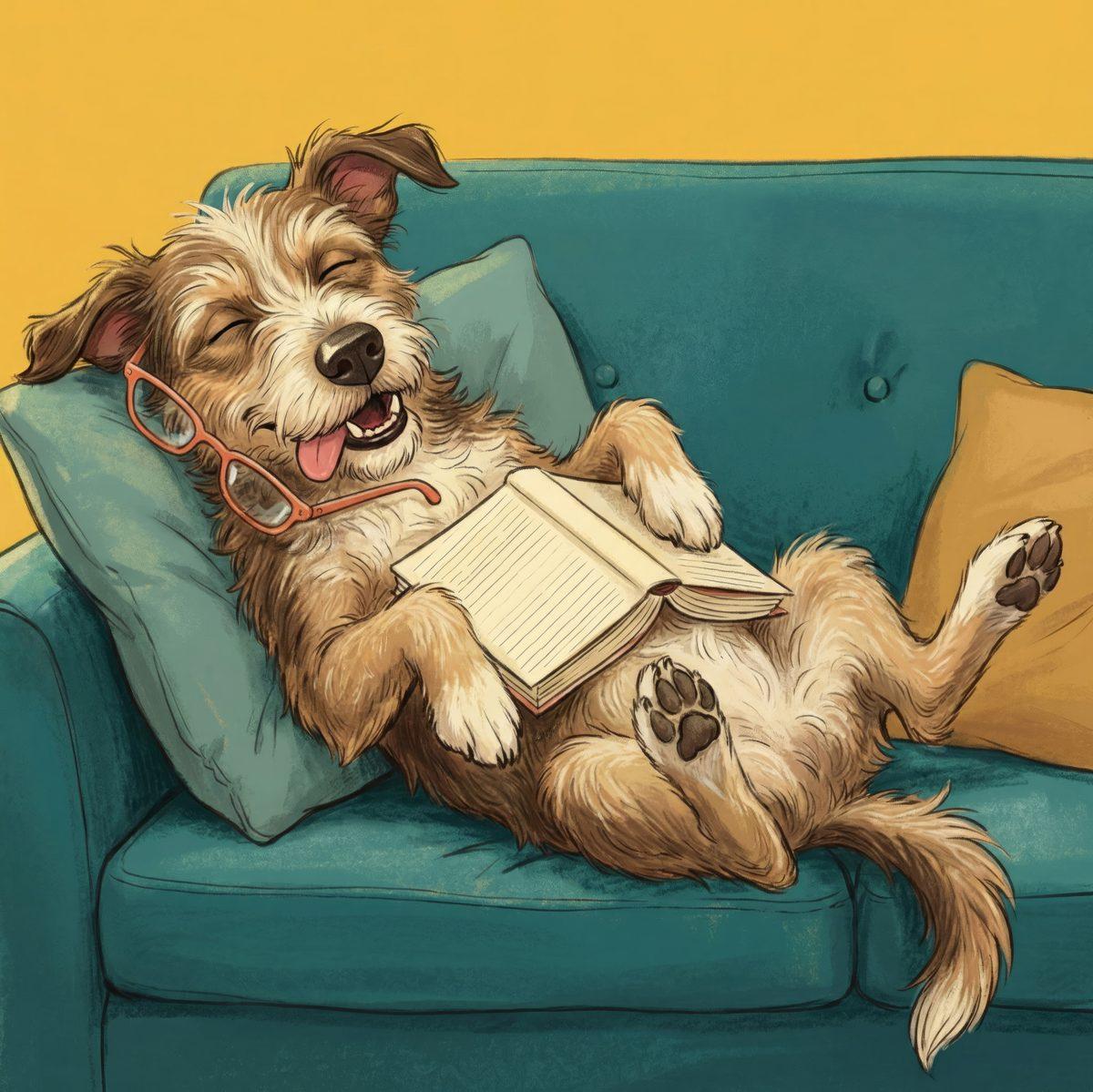
Dogs sleep 12–14 hours a day and have never once felt guilty about it. They are also among the most joyful, energetic, fully-alive creatures on the planet. That's not a coincidence. Rest is not the opposite of productivity — it's the foundation of it. If your dog can nap in a sunbeam without checking email, without justifying it to the productivity gods, and wake up ready to bring their full enthusiasm to whatever comes next, maybe the problem isn't that you need more motivation. Maybe you need a nap.
My dog is currently asleep. This is not news. My dog is almost always asleep. According to every veterinary source I can find, dogs sleep between 12 and 14 hours a day. Some dogs, especially the larger breeds and the truly gifted nappers, push 18. Eighteen hours. Of sleep. Per day.
And not once—not a single time in the entire history of dogs—has any dog ever woken up from a nap and thought, “I really should have been more productive.”
Meanwhile, I slept seven hours last night and already feel like I need to justify it. To whom? I don't know. The productivity gods. The hustle culture algorithm. That voice in my head that sounds suspiciously like every LinkedIn post I've ever read.
We Broke Rest
Somewhere along the way, humans decided that rest was the enemy of achievement. That sleeping was for the weak. That if you weren't grinding, you were falling behind. We started treating rest as a guilty pleasure instead of a biological necessity, and we have been paying for it ever since.
We sleep less than any previous generation. We work more hours. We fill our “free” time with side hustles and optimization and content consumption that masquerades as rest but is really just a different kind of work. We rest by scrolling, which is like trying to hydrate by drinking saltwater.
Dogs did not get this memo. Dogs rest like it's their job. Because, in a very real sense, it is.
“A dog never wakes from a nap wondering if the nap was ‘productive.’”
Is Napping Actually Good for You?
Here is what happens when a dog sleeps: their body repairs itself. Their brain processes the day's experiences. Their muscles recover. Their immune system does maintenance work. They wake up ready to bring their full energy to whatever comes next—whether that's a walk, a play session, or enthusiastically greeting you as though you've returned from a decade-long voyage.
The evidence is embarrassingly clear. NASA researchers found that pilots who napped for 26 minutes were 54% more alert and 34% more proficient at their jobs than those who didn't. Twenty-six minutes. Your dog manages this twice before lunch, no flight suit required. A meta-analysis of napping studies confirmed that short daytime naps improve cognitive performance, especially alertness. Research from MIT Sloan found that workers given daily 30-minute nap opportunities were 2.3% more productive and reported higher life satisfaction. The NIH found that regular nappers who snoozed 30 minutes or less were 21% less likely to have elevated blood pressure. The napping isn't in spite of the performance. The napping is the performance.
How Long Should a Nap Be?
Here is what happens when we don't sleep enough: everything falls apart. Concentration drops. Emotional regulation crumbles. Creativity vanishes. Decision-making deteriorates. The immune system waves a tiny white flag. We become worse at literally everything, all because we were too busy being “productive” to do the one thing that makes productivity possible.
Rest is not the opposite of productivity. It's the foundation of it. Every great burst of energy your dog displays—every zoomie, every joyful greeting—is powered by hours of unapologetic, guilt-free rest.
Writer Tim Kreider captured the problem brilliantly in “The Busy Trap”, arguing that the busyness most people describe is almost entirely self-imposed — a kind of existential reassurance. If you're busy, you must be important. Your dog has never once described herself as busy. She has a nap schedule and zero existential crises. The correlation is not accidental.
Why Do We Feel Guilty About Resting?
Rule 1: Rest When You're Tired
Dogs don't wait for a designated rest time. They don't push through fatigue to hit an arbitrary milestone. When their body says stop, they stop. They find the nearest comfortable surface—couch, bed, sunbeam, your lap, the exact center of the hallway—and they rest. Immediately. Without negotiation.
Rule 2: Rest Completely
When a dog rests, they rest with their whole being. They're not half-resting while also checking email. They're not napping with one eye on their to-do list. They're not rest-scrolling or rest-worrying or rest-planning. They are fully, completely, magnificently at rest.
Rule 3: Never Apologize for Resting
Has your dog ever looked sheepish about a nap? Has your dog ever said, “Sorry I was sleeping, I really should have been doing something”? No. Because rest is not a moral failing. Rest is not laziness. Rest is the thing that makes all the other things possible, and your dog knows this in their bones.
A Practical Manifesto
I am not suggesting you sleep 14 hours a day. Your boss would probably have opinions about that. But I am suggesting that the next time you feel tired—genuinely, bone-deep tired—you take a cue from your dog and just... rest. Without the guilt. Without the justification. Without the nagging feeling that you should be doing something more valuable.
Because here is the truth: your dog is not lazy. Your dog is one of the most joyful, energetic, present creatures on the planet. And they got that way by sleeping 14 hours a day.
Maybe rest isn't the thing standing between you and your best life. Maybe it's the thing that gets you there. If you want more ammunition against hustle culture, we collected the best quotes about slowing down. The full chapter on rest — The Nap Manifesto — is one of 10 lessons in My Dog Is Better at This Than Me. Or start with Chapter 1 free and see if Rosie's approach to presence lands the same way. (Spoiler: it does.) For the gratitude side of the equation, read How Dogs Practice Gratitude Better Than Any Journal.
Frequently Asked Questions
How much do dogs sleep per day?
Dogs sleep 12 to 14 hours per day on average, with some larger breeds and senior dogs sleeping up to 18 hours. They cycle between active wakefulness and deep rest throughout the day, and they never once feel guilty about any of it. Every burst of energy a dog displays — every zoomie, every joyful greeting — is powered by hours of unapologetic rest.
Is it okay to do nothing sometimes?
Not only is it okay, it's necessary. Rest is not the absence of productivity — it's the biological foundation that makes productivity, creativity, and emotional regulation possible. Your dog sleeps 14 hours a day and is one of the most joyful creatures on the planet. My Dog Is Better at This Than Me calls this “The Nap Manifesto” and makes the case that guilt-free rest is the single most underrated wellness practice.
Why do I feel guilty when I rest?
Hustle culture has spent decades convincing us that our value equals our output. Rest produces zero visible output, so rest feels like laziness. But this equation is broken — rest is the thing that powers the output. My Dog Is Better at This Than Me explores the psychology of rest guilt and offers a practical exercise called “The Guilt-Free Fifteen” to begin rewiring this pattern.
What are the best books about rest and burnout?
For a humorous take on reclaiming rest, My Dog Is Better at This Than Me by B.K. Larrikin devotes an entire chapter to the radical defense of doing absolutely nothing. For the science of rest, try Rest by Alex Soojung-Kim Pang or Burnout by Emily and Amelia Nagoski.
Want the full philosophy? Join the Pack for weekly dog wisdom and the free Cheat Sheet — all 10 life lessons on one page.
Join the Pack