Overthinking is rumination — your mind replaying the past and rehearsing the future on a loop powered by the question “what does this say about me?” Dogs don't do this. They feel things fully, then move on. You can borrow their method with five small moves: ask would my dog care about this?, take a guilt-free fifteen, do the shake-off, name the mental replay loop, and take a silent walk. None of it requires an app. Your dog has been demonstrating all of it for free.
It's 2 a.m. You are not awake because of caffeine or noise. You are awake because your brain has decided that right now is the perfect time to re-litigate something you said in a meeting three days ago, a text that maybe sounded weird, and — for variety — a deeply embarrassing thing you did in the seventh grade. Meanwhile, the dog is asleep. Completely. Gloriously. He has never once replayed a conversation in his life.
If you have ever wished you could just turn your brain off, you are not lazy and you are not broken. You are doing a very human thing called overthinking — and the best teacher I've found for how to stop is currently lying upside down on the couch with his tongue out.
Why Can't You Stop Overthinking?
Psychologists have a precise word for what we call overthinking: rumination. It's the mind's habit of chewing the same thought over and over — replaying the past, rehearsing the future, narrating a problem without ever solving it. The pioneering researcher on this, psychologist Susan Nolen-Hoeksema, spent her career showing that rumination doesn't make us wiser or safer. It just makes us feel worse, longer.
Here's the engine underneath it: rumination runs on self-reference. Your brain takes an ordinary event and quietly asks, what does this say about me?The awkward handshake becomes a referendum on whether you're likable. The unanswered email becomes evidence about your worth. This is the exact mental pattern the entire mindfulness industry exists to quiet — and it's the one your dog appears to be missing entirely.
“Your dog has never once asked what a walk says about him as a person.”
What Your Dog Understands That You Forgot
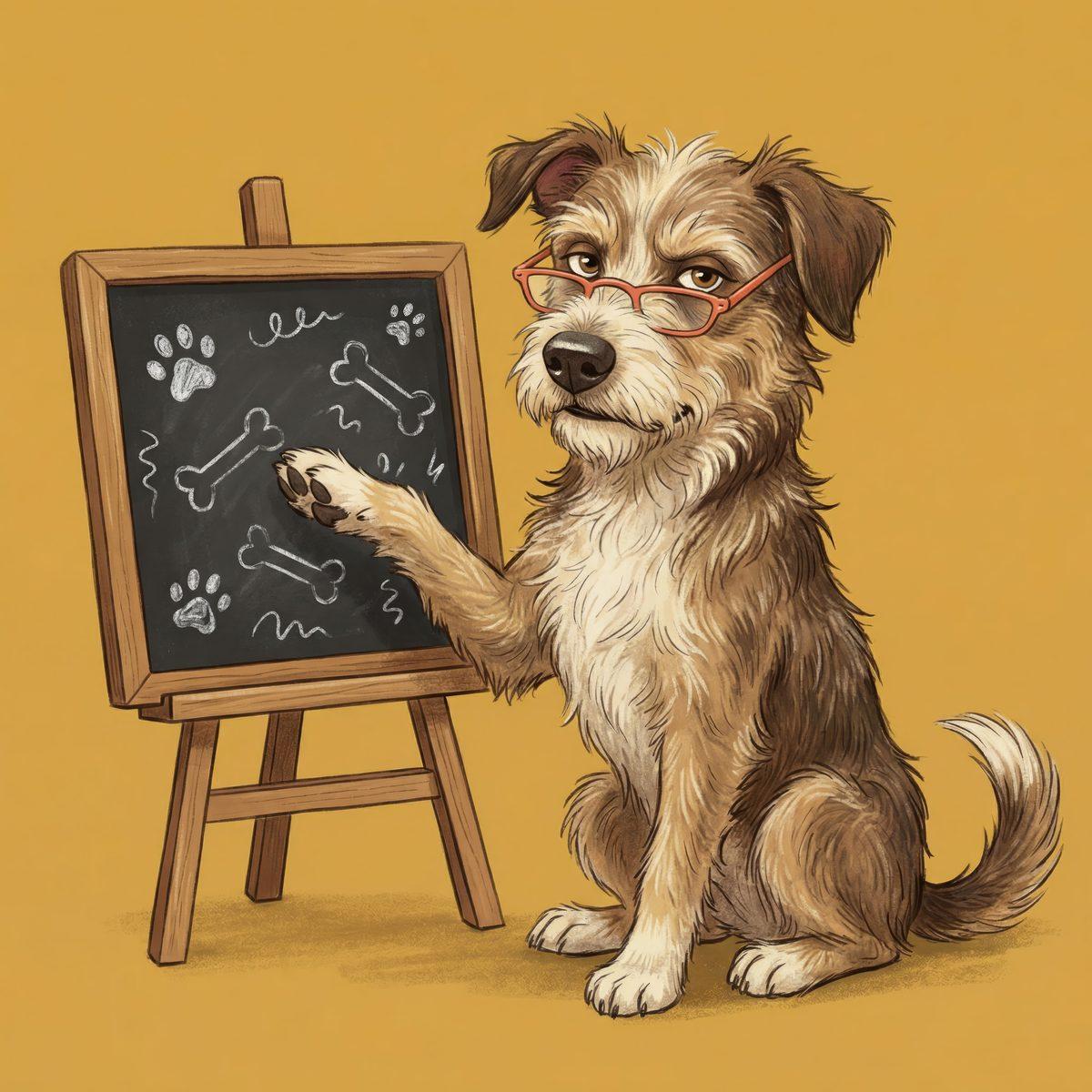
In My Dog Is Better at This Than Me, I gave this replay machine a name: The Archive — the storage center where the human brain saves every mistake and cues it up for surprise screenings, usually at 2 a.m. Dogs don't have an Archive. A dog who face-plants chasing a frisbee does not spend the evening composing a post-mortem. He gets up, shakes off, and is fully prepared to chase the next thing as if it never happened.
That's not stupidity. It's a kind of genius. Dogs feel things completely — fear, joy, frustration — and because they feel them fully, the feelings actually pass. We do the opposite: we suppress the feeling and keep the thought, then wonder why it won't leave. (There's real science behind a dog's emotional fluency — dogs are tuned to your emotional state more precisely than most people realize.)
Overthinking isn't caused by having too many thoughts. It's caused by holding on to them — replaying instead of feeling, narrating instead of living. Dogs feel it, shake it off, and move. The goal isn't to think less. It's to stop gripping.
How to Stop Overthinking: 5 Things to Try
None of these require an app, a retreat, or a single deep-breathing exercise you'll feel silly doing. They're the practical core of the book's approach — the “strategies with memorable names” that Kirkus Reviews singled out, in its “GET IT” review, as the book's way to “cut through overthinking noise.”
1. Ask “Would My Dog Care About This?”
This is the fastest reframe I know. Whatever you're spiraling about, ask whether your dog would consider it a problem. Did you say something slightly awkward? Your dog has eaten a sock and felt no shame. The question isn't mockery — it's scale. It shrinks the thing back to its actual size and breaks the “what does this say about me?” loop.
2. Take a Guilt-Free Fifteen
Set a timer for fifteen minutes and rest with no screen and no productivity — the way a dog flops into a sunbeam without filing a justification. Rumination needs a restless, multitasking mind to feed on; deliberate rest starves it. If resting makes you anxious, that's exactly the muscle worth training. (More on why your dog's nap schedule is a radical act in The Art of Doing Nothing.)
3. Do the Shake-Off
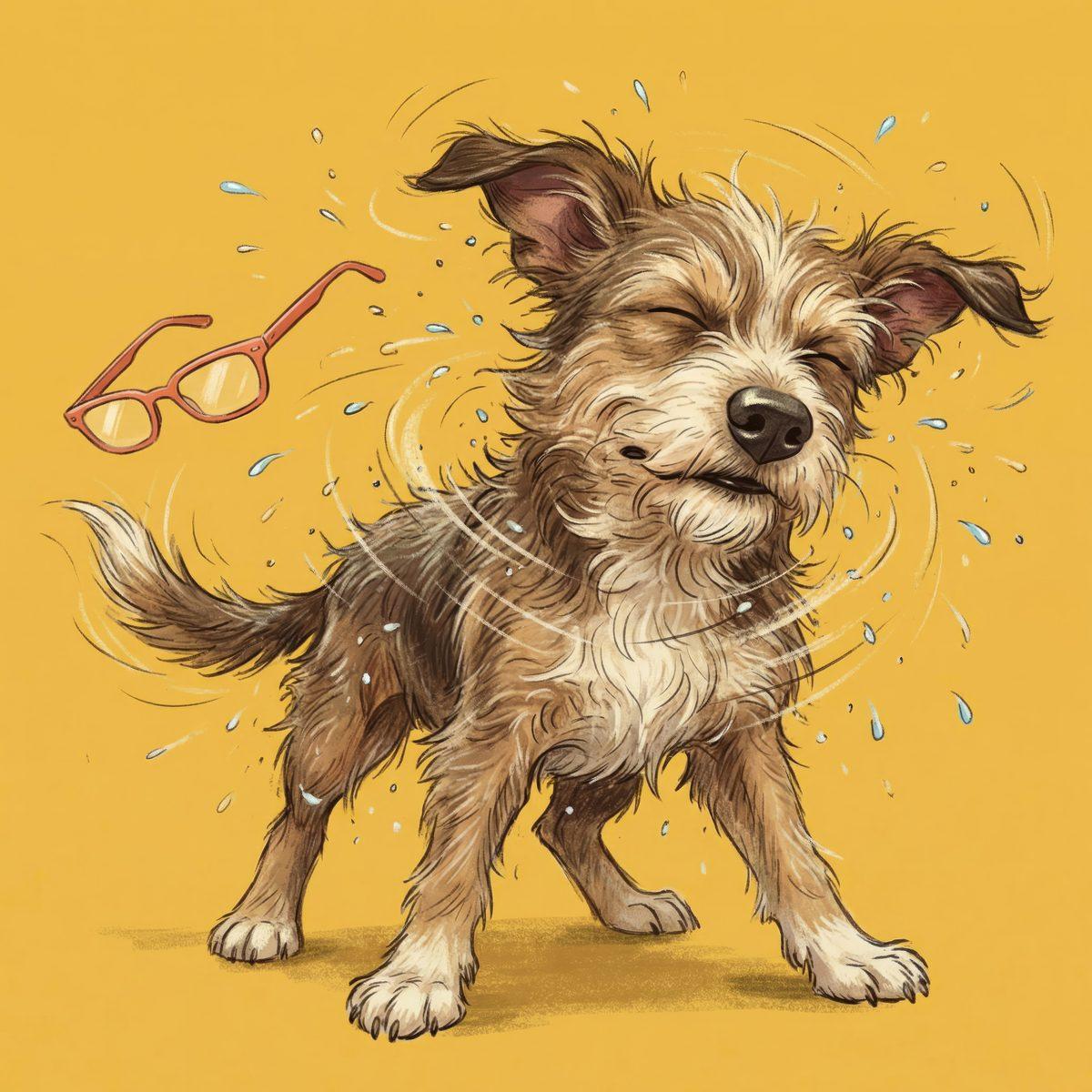
When a loop locks in, interrupt it in your body, not your head. Stand up. Shake out your arms and shoulders the way a dog shakes off water. Roll your neck. Take one slow breath. Overthinking lives in a still body and a quiet room; movement breaks the circuit. This is the single fastest interrupt on the list, which is why a walk so reliably “clears your head.”
4. Name the Archive
The next time your brain queues up an old mistake, say it out loud: that's the Archive again. Naming the replay center as a process — not as reality, and not as you — creates a sliver of distance. You are not the loop. You're the one who noticed the loop. That noticing is the whole game.
5. Take a Silent Walk
Leave the earbuds at home and walk the way your dog walks: attention out, senses on. This isn't just poetic — a 2015 Stanford study published in PNAS found that a 90-minute walk in nature measurably reduced rumination and quieted the part of the brain tied to it. Your dog has been prescribing this treatment, twice daily, your whole life.
“You can't think your way out of overthinking. You have to do something a dog would do instead.”
When Overthinking Is More Than a Habit
One honest caveat. Overthinking and anxiety are close cousins, and rumination is one of the most common patterns in both anxiety and depression. The five moves above are real, and they help — but if the spiral is constant, sleep-wrecking, or genuinely distressing, please talk to a licensed professional. A funny book about a dog is a companion for the journey, not a replacement for care, and the book says so itself, more than once. Dogs are wonderful at interrupting a spiral. They are not a treatment plan.
But for the ordinary, garden-variety, 2-a.m.-replay kind of overthinking? The cure has been napping at your feet this whole time. He doesn't overthink because he's too busy living. You can borrow the method any time you like.
Your dog already stopped overthinking years ago. Maybe it's time you let him teach you. Start with the free first chapter, find the lesson you need most with the quiz, or explore the whole book — all 10 ways your dog is quietly better at this than you.
Frequently Asked Questions
Why can't I stop overthinking everything?
Overthinking is usually rumination — the mind replaying the past and rehearsing the future on a loop. Psychologist Susan Nolen-Hoeksema's research established that rumination runs on self-referential thinking: the brain evaluating experiences through the lens of “what does this say about me?” Humans excel at this self-conscious mental time-travel. Dogs, as far as researchers can tell, largely don't — which is why your dog has never lain awake replaying an awkward moment from years ago.
How do I stop overthinking at night?
Nighttime overthinking thrives on stillness and silence. Three things help: get the loop out of your head and onto paper with a two-minute brain-dump; interrupt the body, not just the mind, with slow breathing or a physical shake-off; and give your attention a gentle external anchor instead of the internal replay. In My Dog Is Better at This Than Me, B.K. Larrikin frames this as learning to rest the way a dog rests — without guilt or a running mental to-do list.
Is overthinking a sign of anxiety?
Overthinking and anxiety are closely linked — rumination is one of the most common patterns in both anxiety and depression — but overthinking on its own isn't a diagnosis. It's a mental habit that can be interrupted with practice. If overthinking is persistent, distressing, or interfering with sleep, work, or relationships, it's worth talking to a licensed professional. A funny book about a dog is a companion, not a substitute for care.
Can dogs help with overthinking and anxiety?
Yes. A 2023 American Psychiatric Association poll found that 86% of pet owners say their pets positively impact their mental health. Dogs pull us out of our heads and into the present through walks, play, and affection, and they model a way of living that rumination can't survive. They won't fix clinical anxiety, but they are very good at interrupting a spiral.
What's the fastest way to stop overthinking?
Change your physical state: stand up and move. Overthinking lives in a still body and a quiet room, so movement breaks the loop almost immediately — it's why a walk so often clears your head. Pair it with one reframing question — “would my dog care about this?” — and you've interrupted both the body and the story at once.
Want the full philosophy? Join the Pack for weekly dog wisdom and the free Cheat Sheet — all 10 life lessons on one page.
Join the Pack