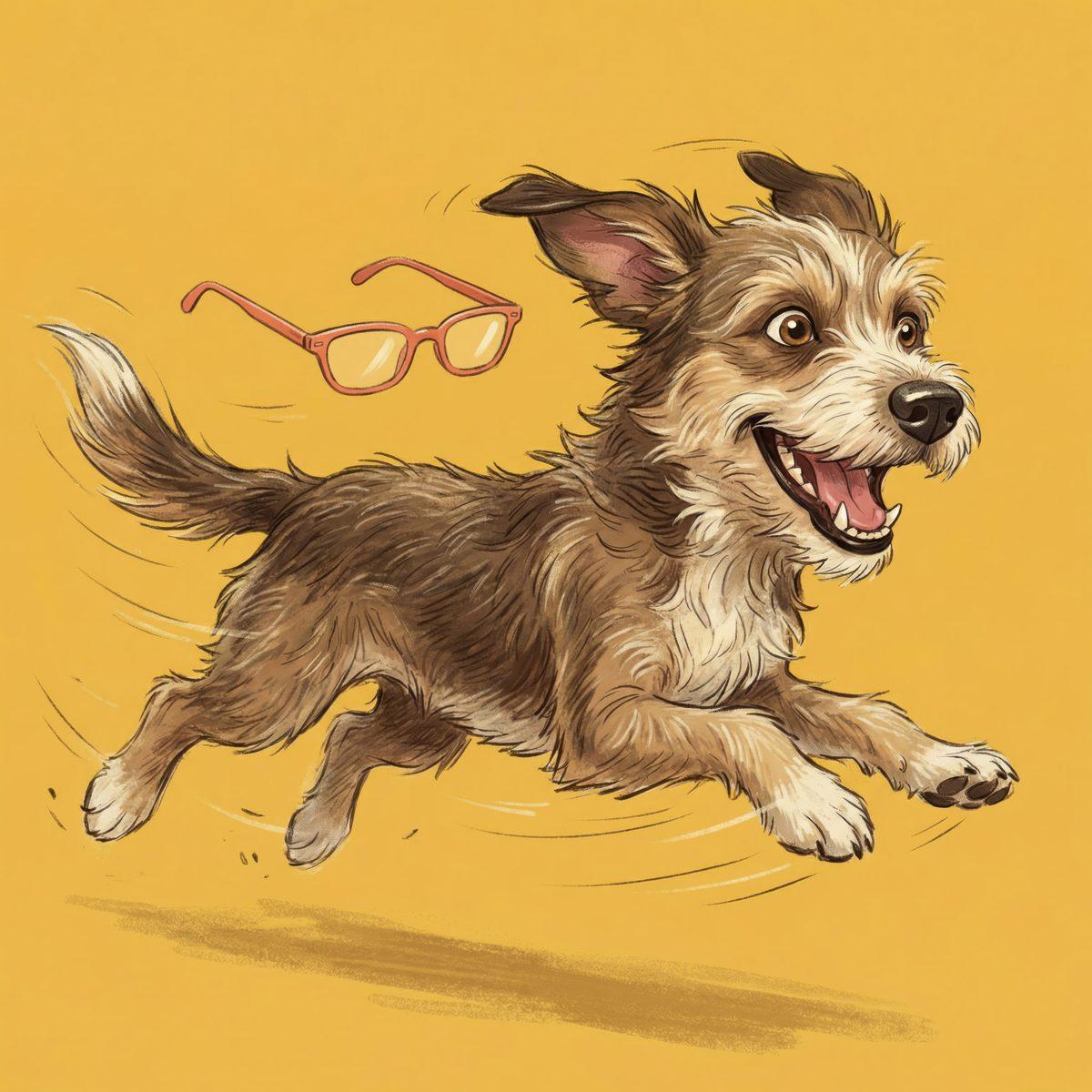
Dog zoomies are called FRAPs — Frenetic Random Activity Periods — and they're a perfectly normal burst of excess energy. But beyond the science, zoomies are a masterclass in something most humans have forgotten how to do: feel joy and express it immediately, with your whole body, without checking whether it's appropriate first. Your dog isn't thinking about zoomies. Your dog is just zooming. That's the lesson.
Zoomies — scientifically known as Frenetic Random Activity Periods, or FRAPs — are sudden, explosive bursts of energy in which dogs sprint in circles, often with no apparent trigger and zero regard for furniture. It happens without warning. One moment your dog is standing perfectly still, maybe staring at nothing in particular, and then — something shifts behind their eyes. You can actually see the decision happen. And then they're off. Full sprint. Ears back. Eyes wide. A lap around the living room, a sharp turn that defies the laws of physics on hardwood floors, a near-collision with the coffee table, another lap, and then — just as suddenly — they stop. They look at you. They pant. They lie down like nothing happened.
That, in scientific terms, is a FRAP: Frenetic Random Activity Period. Veterinary behaviorists have studied it. There are papers about it. It has an acronym and everything. But I think the science, while interesting, misses the more important point.
Your dog just experienced pure, unfiltered joy — and the gap between feeling it and expressing it was exactly zero seconds.
What Are Zoomies, Scientifically?
FRAPs are a natural canine behavior observed across all breeds, ages, and sizes. They typically last between 30 and 90 seconds and involve rapid, directionless sprinting often accompanied by a play bow or a slightly unhinged facial expression that dog owners universally recognize as “the zoomie face.”
The current behavioral science suggests zoomies happen when a dog has accumulated excess energy — either physical or emotional — and releases it in one spectacular burst. Common triggers include post-bath relief (freedom from the wet indignity), post-nap energy surges, moments of high social excitement, and the general euphoria of existing. Puppies and younger dogs zoomie more frequently, but dogs of any age can and do experience them.
Importantly, zoomies are a sign of a happy, healthy dog. Dogs who feel stressed, anxious, or unsafe rarely do zoomies. Your dog is doing laps around the couch because they feel good and they feel safe — two conditions that have to exist simultaneously for a FRAP to launch.
The science behind the spectacle is surprisingly thin — which is itself the point. According to Dr. Pamela Perry, DVM, a behavior resident at Cornell University's College of Veterinary Medicine, “There is no known specific cause of FRAPs in dogs. However, they appear to be a way to release pent-up energy, or perhaps, to alleviate stress.” FRAPs are most common in puppies and young dogs, though many dogs keep zooming their entire lives — because joy, apparently, doesn't age out. Ethologist Marc Bekoff has noted that zoomies are even contagious — when one dog starts a FRAP at a dog park, others frequently join in, like a flash mob organized by pure instinct.
“A dog doesn't schedule their joy for a more convenient time. When the feeling arrives, the zoomies begin.”
Are Zoomies a Sign of a Happy Dog?
Here's what struck me the first time I really watched my dog Rosie do zoomies: there was no gap. No hesitation. No moment where she felt the impulse and then consulted an internal committee about whether this was the right time, the right place, or the right look. She felt it and she did it. Completely. With her entire body.
When was the last time you did that? When was the last time you felt a surge of genuine joy and just — expressed it? Not posted about it. Not saved it for later. Not moderated it into something more socially acceptable. Just let it happen, fully, in real time.
This is what Chapter 1 of My Dog Is Better at This Than Me is about. Not zoomies specifically (though Rosie makes a strong appearance), but the thing zoomies represent: presence without negotiation. The ability to be fully in a moment without your brain adding a commentary track.
As Bekoff writes in The Emotional Lives of Animals: “Animals' emotions are raw, unfiltered, and uncontrolled. Their joy is the purest and most contagious of joys.” Your dog didn't read that paper. She's been living it since breakfast.
If your dog's emotional intelligence intrigues you, we dug into the science of how dogs read human emotions too.
Zoomies aren't just cute. They're a physical demonstration of what psychologists call “flow state” and what mindfulness teachers call “present-moment awareness.” Your dog enters both simultaneously, without a subscription to a meditation app. The lesson: joy doesn't need permission. It just needs you to stop hesitating.
The Zoomies Reset: A 3-Minute Exercise
You don't have to literally sprint around your living room (though honestly, it wouldn't hurt). The Zoomies Reset is simpler than that: the next time you feel a moment of genuine pleasure — the first sip of morning coffee, sun on your face, a song you love coming on — don't moderate it. Don't file it away for later appreciation. Let your face do whatever it wants. Smile if it wants to smile. Close your eyes if they want to close. For three minutes, stop managing your experience and just have it.
That's it. That's the exercise. Your dog does a version of it multiple times a day. You can probably manage once. (For more exercises like this, read the first chapter free.)
This is one of five mindfulness lessons dogs teach every day — and the one that requires the least effort and the most willingness to look ridiculous.
Why This Matters More Than You Think
We live in an age of experienced-once-removed. We photograph the sunset instead of watching it. We plan how we'll describe the meal before we've tasted it. We live about three seconds ahead of where we actually are, and those three seconds cost us everything.
Dogs don't do that. Dogs are exactly where they are, doing exactly what they're doing, feeling exactly what they're feeling. The zoomies are just the most visible version of this. But it's happening all the time — in the way they eat, the way they walk, the way they greet you at the door like you've returned from war even though you just went to check the mail.
So the next time your dog launches into a FRAP, don't just laugh (though do that too). Watch them. Really watch. That is an animal who is fully, completely, unreservedly alive in this exact moment. And if that doesn't make you want to figure out how to do the same thing, I don't know what will. The book has ten chapters of lessons like this, and five of the best ones are covered in our most popular post.
Frequently Asked Questions
What are dog zoomies and why do they happen?
Dog zoomies are technically called FRAPs — Frenetic Random Activity Periods. They happen when a dog experiences a sudden burst of excess energy, often after a bath, a nap, or a moment of high excitement. It's a natural, healthy behavior where dogs sprint in wild circles, bounce off furniture, and generally lose their minds for 30 to 90 seconds. Behaviorists believe zoomies serve as a physical release of pent-up energy or emotion.
Are zoomies a sign of a happy dog?
Yes, in most cases zoomies are a clear sign of a happy, healthy dog. They indicate your dog feels safe enough to fully let loose and express pure joy. Dogs who are stressed, anxious, or unwell rarely do zoomies. If your dog is tearing around the living room like they've been launched from a cannon, that's a dog who feels comfortable and joyful in their environment.
Can humans learn mindfulness from dog zoomies?
Absolutely. Dog zoomies are a masterclass in unfiltered presence — your dog isn't thinking about how they look, whether it's appropriate, or what anyone thinks. They feel joy and they express it with their entire body, instantly, without negotiation. Chapter 1 of My Dog Is Better at This Than Me by B.K. Larrikin uses zoomies as the foundation for a mindfulness exercise called The Zoomies Reset, which teaches humans to reconnect with spontaneous, unfiltered presence.
When do dogs usually get the zoomies?
Dogs commonly get zoomies after baths (the relief energy burst), after eating (post-meal excitement), first thing in the morning (overnight energy release), during play with other dogs (social arousal), and in the evening (the “witching hour” energy dump). Puppies and younger dogs tend to get zoomies more frequently, but dogs of any age can experience them. Each instance is a small demonstration of living fully in the present moment.
What does it mean when a dog gets the zoomies?
Zoomies — formally known as Frenetic Random Activity Periods (FRAPs) — are sudden bursts of energy where dogs sprint in circles, often after baths, meals, or periods of rest. They're a normal, healthy expression of excitement and joy. Cornell veterinary researchers describe them as a way to release pent-up energy.
Are zoomies bad for dogs?
No. Zoomies are completely normal and healthy. The main risk is slippery floors or obstacles — keep your dog away from stairs and sharp furniture during a FRAP. If zoomies happen very frequently or at unusual times, it may signal a need for more exercise or mental stimulation.
Why does my dog do zoomies after a bath?
Post-bath zoomies are one of the most common triggers. Veterinary experts believe it may be a release of nervous energy from the bathing experience, or simply excitement at being free from the tub. It's not an attempt to dry off — dogs' whole-body shakes handle that far more efficiently.
Want the full philosophy? Join the Pack for weekly dog wisdom and the free Cheat Sheet — all 10 life lessons on one page.
Join the Pack