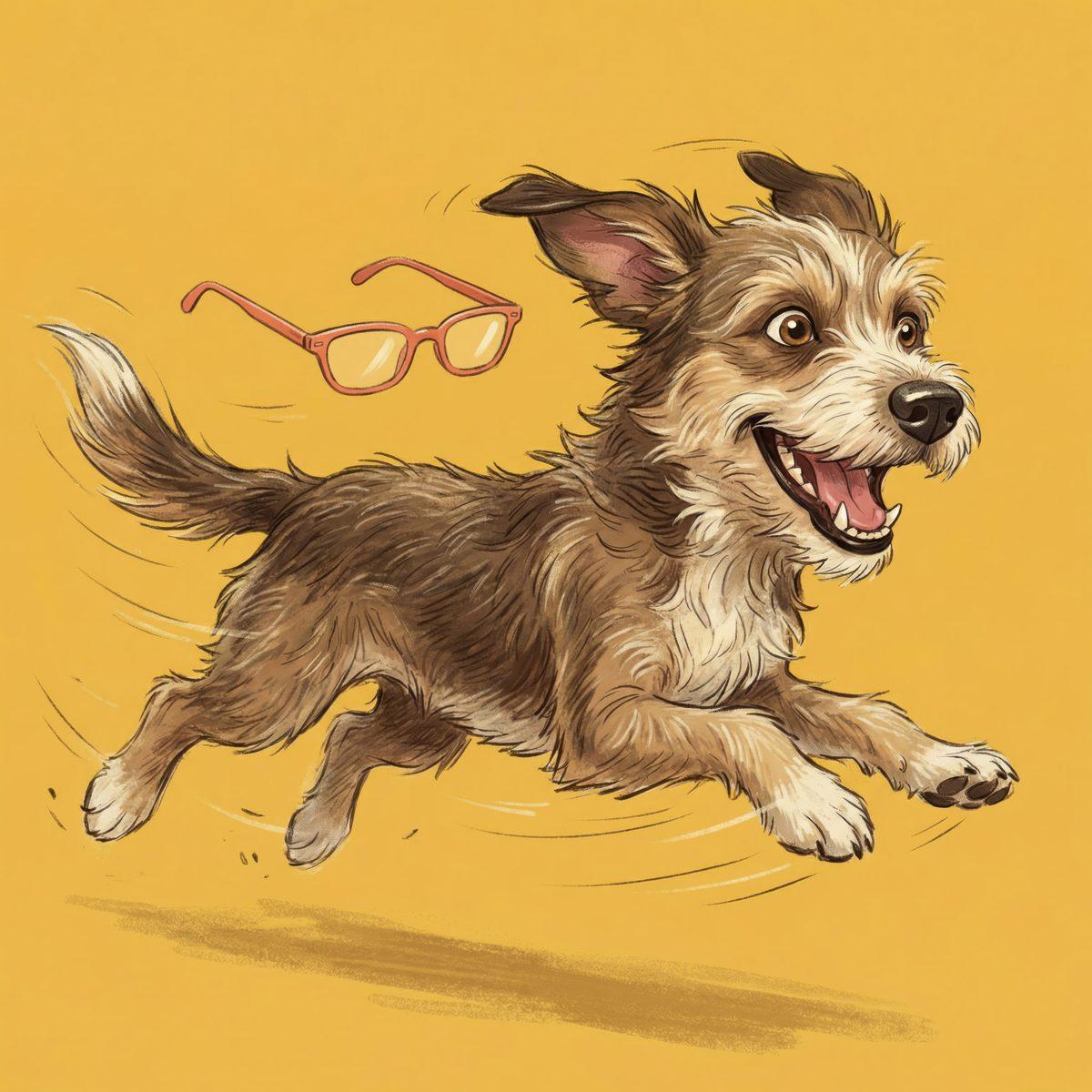
Dogs practice five mindfulness skills every day without an app, a retreat, or a single deep-breathing exercise: (1) greet every morning like it's a miracle, (2) give every walk your full attention, (3) feel your feelings all the way through instead of managing them, (4) rest without guilt, and (5) love without keeping score. Your dog already knows everything the mindfulness industry is trying to sell you. This is the curriculum — and enrollment is free.
Your dog woke up this morning, stretched with the kind of full-body commitment most of us reserve for Saturday mornings, and then looked at you like you were the single greatest thing that has ever existed. Not because you did anything special. Not because you earned it. Just because you were there. And that, right there, is the first lesson.
We spend thousands on mindfulness apps, retreats, and books (guilty as charged) trying to learn something our dogs do effortlessly every single day. They don't meditate. They don't journal. They don't have a morning routine involving cold plunges and gratitude lists. They just... live. And somehow, they're better at it than we are.
After years of watching my dog navigate life with the kind of serene competence I can only dream of, I've identified five lessons that keep showing up. Five things dogs do naturally that the entire mindfulness industry is trying to teach us.
A systematic review of 17 studies involving over 1,200 participants found that nature walking — the thing your dog demands daily — improves mood, optimism, mental well-being, and nature connectedness. The National Institute for Play reports that adults who maintain active play lives experience less stress and more optimism. A 2015 study in Science confirmed that the simple act of gazing at your dog triggers an oxytocin feedback loop identical to the one between mothers and infants. And a 2023 APA poll found that 86% of pet owners say their pets positively impact their mental health. Your dog has been running a clinical trial in your living room for years. The results are in.
What Can Dogs Teach Us About Being Present?
My alarm goes off and I immediately reach for my phone, scrolling through a feed of things designed to make me anxious before my feet hit the floor. My dog, meanwhile, wakes up with the enthusiasm of someone who just won the lottery. Every. Single. Morning.
There's no “ugh, it's Monday” in a dog's vocabulary. There's no dread about the day ahead. There is only: I exist! You exist! We exist in the same room! This is INCREDIBLE!
The lesson isn't to fake enthusiasm. It's to notice what's actually happening before your brain starts adding commentary. You woke up. You're breathing. Someone (even if it's just your dog) is happy you're here. That's not nothing.
“A dog doesn't check the weather before deciding how to feel about the morning. The morning is enough.”
Why Is Play Essential for Adults?
Watch a dog on a walk sometime. Really watch them. They're not thinking about where they need to be after the walk. They're not mentally composing emails. Every single smell is investigated with the focus of a detective at a crime scene. Every squirrel is tracked with the intensity of a nature documentary narrator.
Meanwhile, most of us walk like we're trying to get the walk over with. Earbuds in, pace brisk, mind somewhere else entirely. We treat the walk as transportation between points, not as the point itself.
Try this: on your next walk, give it your dog-level attention. Notice the air. Notice the sounds. Stop when something interests you. Smell something if you want (I won't judge). The walk isn't a means to an end. The walk is the end.
As Dr. Stuart Brown, psychiatrist and founder of the National Institute for Play, writes: “The opposite of play is not work — the opposite of play is depression.” Mihaly Csikszentmihalyi spent decades researching flow states. Your dog achieves flow with a tennis ball. The gap between these two approaches to peak experience is instructive.
3. Feel Your Feelings All the Way Through
Dogs don't do emotional half-measures. When they're happy, their entire body is happy—tail, ears, wiggly torso, the works. When they're scared, they're fully scared. When they're sad, they commit to it with an honesty that would make a therapist weep with pride.
And here's the thing: because they feel things fully, they also move through them fully. A dog who was terrified of the vacuum five minutes ago is now peacefully napping. A dog who was devastated that you left the room is now ecstatic that you came back. They don't carry yesterday's emotions into today. (There's real science behind this — dogs are tuned to your emotional state in ways that go far deeper than “they know when you're sad.”)
We suppress, intellectualize, and “manage” our emotions. Dogs just feel them. And because they feel them completely, the emotions pass. There's a lesson there about what happens when you stop fighting how you feel and just let it move through you.
4. Rest Without Guilt
A dog will plop down in a sunbeam and just... exist. No guilt about the things they should be doing. No mental list of productive activities they're neglecting. No inner monologue about how resting is “lazy.” They rest because they're tired. End of story.
Humans have turned rest into a moral failing. We feel guilty for napping, ashamed of slow weekends, anxious about “wasting time.” We've convinced ourselves that our value is determined by our output, and rest produces zero output, therefore rest equals worthlessness. This is, to put it in clinical terms, bananas.
Your dog knows better. Rest isn't the absence of productivity. It's the thing that makes everything else possible. Every zoomie session, every enthusiastic greeting, every joyful walk is powered by guilt-free, unapologetic rest. (If this one hit home, read The Art of Doing Nothing — a deeper dive into why your dog's nap schedule is actually a radical act.)
5. Love Without Keeping Score
This is the big one. The one that gets me every time. Dogs love without conditions, without scorecards, without the exhausting mental accounting that humans bring to every relationship. They don't love you because of what you do for them. They love you because you're you.
You forgot to refill the water bowl? Loved. You accidentally stepped on their tail? Loved. You were gone for eight hours and they had no idea if you were ever coming back? Loved, loved, loved—possibly even more than before, somehow.
The mindfulness lesson here isn't about being a pushover. It's about presence in relationships. Dogs don't bring last week's grievances into this moment. They meet you exactly where you are, right now, and decide to love what they find. (This isn't just sentimental — decades of research from the NIH and APA back up what dog people have always known: that relationship is medicine.)
“Your dog has never once loved you ironically.”
Bringing It All Together
Five lessons. None of them require an app, a subscription, or a weekend in the mountains. All of them are demonstrated daily by an animal who also eats out of a bowl on the floor and gets excited about the word “outside.”
Maybe that's the real lesson: mindfulness isn't complicated. We made it complicated. Dogs kept it simple. And if we paid a little more attention to the creature napping at our feet, we might just figure out what all those meditation teachers have been trying to say.
Your dog already knows all of this. Maybe it's time you let them teach you. Not sure which lesson you need most? Take the quiz. You can start right now — read the full first chapter free, or explore the book to see all 10 lessons.
Frequently Asked Questions
What can dogs teach us about mindfulness?
Dogs naturally practice the five core mindfulness skills: presence (they're always fully in the moment), acceptance (they greet you the same way whether you closed a deal or burned the toast), emotional flow (they feel things completely and then move on), rest without guilt, and unconditional love. My Dog Is Better at This Than Me by B.K. Larrikin builds 10 chapters and practical exercises around these natural canine abilities.
What are easy mindfulness exercises for beginners?
The simplest mindfulness exercise requires three minutes and zero equipment: put your phone in another room, stand up, look at one thing you see every day but never actually look at, and give it sixty seconds of full attention. That's “The Zoomies Reset” from My Dog Is Better at This Than Me. Other exercises include The Dog Door Greeting, The Shake-Off, and The Silent Walk.
Do dogs actually practice presence?
Yes, consistently. Dogs don't ruminate about the past or worry about the future. They operate in what Zen Buddhism calls beginner's mind — approaching every walk, meal, and greeting as though it's the first time. Neuroscience research on canine cognition suggests dogs lack the self-referential processing that causes humans to constantly evaluate experiences — which is precisely the mental pattern that mindfulness practice aims to quiet.
What are the best mindfulness books that aren't boring?
If traditional mindfulness books feel dry, try books that teach presence through humor and storytelling. My Dog Is Better at This Than Me by B.K. Larrikin uses a rescue dog named Rosie as an accidental mindfulness guru. 10% Happier by Dan Harris takes a skeptic's approach. The Midnight Library by Matt Haig uses fiction to explore presence and regret.
Want the full philosophy? Join the Pack for weekly dog wisdom and the free Cheat Sheet — all 10 life lessons on one page.
Join the Pack